

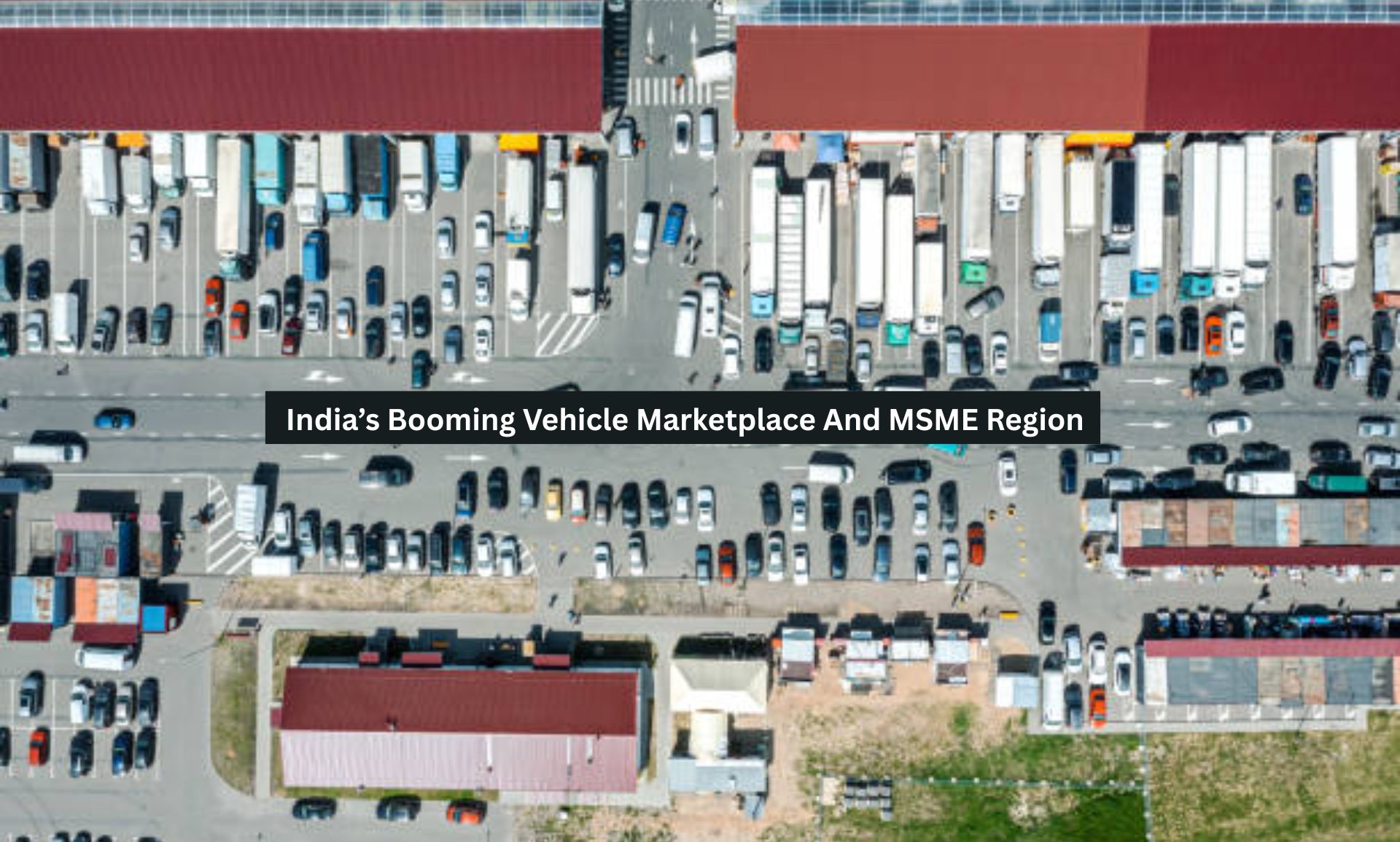
India ranks as the world’s third-largest car market, contributing 7.1% to the USA’s GDP and presenting employment to 37 million human beings. Additionally, the industry holds a 4.7% percentage in India’s exports and bills for 40% of global R&D. Considerably, India plays a huge position inside the international heavy automobile marketplace, as the biggest tractor producer, the second one-largest bus manufacturer and the 0.33-largest heavy truck producer international. The Indian car market has witnessed huge growth, achieving a price of USD 116.86 billion in 2023, reflecting an 8.10% increase from USD 108.10 billion in 2022.
Government Initiatives Driving Increase Within The Vehicle Industry
Authorities tasks along with the production-connected Incentive (PLI) Scheme have been in particular successful, attracting a proposed investment of sixty seven,690 crore, surpassing the initial goal estimate of 42,500 crore over a 5-year period. Additionally, proactive measures along with ‘Make in India’, the foreign change policy (FTP) and schemes just like the develop Authorisation and Export promoting Capital goods Scheme have been applied, boosting manufacturing and automobile exports.
Technological Improvements Enhance Virtual Adoption
Digital adoption and technological upgradation have emerged as key driving factors, with the adoption of connected automotive generation witnessing a upward thrust in India. This allows integrating motors with internet connectivity, allowing functions along with real-time navigation, faraway diagnostics and car-to-car interaction.
Surge In Domestic Car Income
At some stage in FY 2023-24, overall home vehicle sales surged to 23.85 million units, compared to 21.20 million devices over the last financial 12 months. The Passenger automobiles (PV) and the three-wheelers segments skilled strong volume boom, with increases of eight.45% and forty one.Fifty three%, respectively, all through the financial 12 months. PV sales reached forty two,18,746 units, and CV income reached nine,sixty seven,878 devices. This boom changed into propelled by using factors including the expanding center class, growing disposable earning, evolving consumer choices, and stronger infrastructure availability in India.
Indian Automobile Export Trends
India is a extensive player inside the worldwide automobile export marketplace, but it skilled a 5.5% decline in car shipments throughout FY 2023-24. The general export during the monetary 12 months stands at 45,00,492 units in comparison to forty seven,sixty one,299 gadgets in the closing financial year. This decline turned into mostly driven by overseas markets grappling with monetary and geopolitical crises. The Passenger automobile (PV) phase become the sole section to exhibit growth, with shipments growing via 1.4% to reach 6,seventy two,105 units. This increase within the PV section may be attributed to Indian regulatory norms aligning with worldwide standards, ensuing in motors being developed and bought with minimal edition required for export markets.
On the other hand, the government is helping the car enterprise thru initiatives such as the production linked Incentive (PLI) and Make in India, which goal to decorate production capacity and stimulate exports. Moreover, the industry’s ongoing innovation and improvement of superior technology recommend the capacity for in addition growth in exports.
High-Quality Outlook For The Indian Vehicle Enterprise
The Indian car enterprise is poised for good sized increase, projected to growth from USD 116.86 billion in 2023 to USD 217.Ninety billion by using 2031, indicating a CAGR of eight.1%. This boom may be pushed by way of numerous elements, such as increasing domestic call for and beneficial government regulations. Additionally, the enterprise’s ability to conform to future traits including the growing demand for electric cars. Government support thru regulations and initiatives like automobile project Plan 2026, and scrappage policy will even play a critical position in driving this boom.
The Micro, Small And Medium Corporations (MSMEs) Region
India is the world’s 2nd-largest MSME base after China. Indian MSMEs make contributions about 30% to the u . S . A .’s GDP, 6.Eleven% to manufacturing output, and 25.Sixty three% to the services GDP of the Indian economy. The world gives a diverse range of services and manufactures over 6,000 merchandise, starting from conventional to excessive-tech gadgets.
MSME Region Witnesses Tremendous Expansion
The MSME area witnessed sizeable expansion during 2023 with Udyam registrations surging from 1.31 crore as of December 31, 2022, to a complete of two.19 crore. 88.89 lakh registrations have been recorded between January and December 2023. Moreover, a collaborative effort between the Ministry and Small Industries improvement bank of India (SIDBI) caused the release of a portal, for integrating casual Micro organizations (IMEs) into the formal region. About, 1.11 crore IMEs were onboarded onto the UAP through this initiative. Those tasks have facilitated sectoral growth at some stage in the economic yr.
Authorities Support Enhances MSME Region Increase
During the year of reporting, the boom of MSMEs changed into supported via the proactive help of the Indian authorities. The government focussed on assisting the increase and development of MSMEs, implementing various measures to address their specific demanding situations and promote their enlargement. At some point of the 2023-24 price range, the authorities announced the PM Vishwakarma initiative, allocating 13,000 crore for an preliminary five-yr period. As of December 30, 2023, a complete of 48.Eighty lakh enrolments have been recorded underneath PM Vishwakarma. Also, the government undertakings will refund overall performance safety which became deducted throughout the COVID-19 pandemic underneath the Vivad se Vishwas – I. The credit score assure for Micro and Small companies(CGTMSE) become remodeled in the year 2023 wherein the ceiling restrict of guarantee insurance changed into extended from 2 crore to ` five crore.
Authorities Projects Empowering MSMEs
Apart from financial help, the authorities has also launched programmes like raising and Accelerating MSME overall performance (RAMP) and the MSME Self-Reliant India Fund (Fund of funds) to empower MSMEs through generation improvements, ability improvement, and get entry to to markets. Thru these initiatives, the authorities ambitions to cultivate a more inclusive financial environment. This method can assist India liberate the total ability of its MSME region, thereby fuelling additional monetary growth and job introduction.
Addressing Financing Challenges In The MSME Sector
In spite of the world being the u . S .’s socio-monetary development, securing adequate financing poses a key challenge for MSMEs. An estimated credit score gap of 33 trillion obstructs the growth capacity of these enterprises also the MSMEs had been going through the venture of the operating capital hole. As consistent with the IFC file, formal credit channels, address best a fragment of this need, supplying just 10.9 trillion
This leaves a widespread financing gap of ` 22.1 trillion with 67% of this demand attributed to enjoyable running capital wishes. To conquer the challenges, MSME operating capital loans help the enterprise. Additionally, the development of standardised and easily handy working capital merchandise can offer MSMEs the financial flexibility required for his or her growth and fulfillment.
Effective Outlook For The MSME Zone
The Indian economy is poised to gain the milestone of a USD five trillion financial system through 2027-28, with MSMEs expected to be a driving pressure in the back of this increase. This sector stands as a vital pillar of the Indian economy, making great contributions to its increase, employment, and exports. Economists undertake that by 2028, the MSME quarter could be worth ` 1 trillion, with sixty three.Four million MSMEs making full-size contributions to the Indian economy.
This boom might be driven by means of the digitalisation of the world, skill schooling ecosystem of the Ministry of MSME and the recent assist shown via the authorities. MSMEs are nicely placed to force big financial boom, create employment possibilities, and foster entrepreneurship across the country.
Mortgage In Opposition To Belongings
In India, loan towards property (LAP) is a financial product regularly provided with the aid of NBFCs to SMEs. LAP is a sort of loan secured against assets. It gives blessings like no give up-use regulations, income tax exemptions, competitive interest charges, less expensive EMIs, virtual tracking, long compensation period, and income tax exemptions.
The call for is likewise pushed by means of lower interest costs, brief approvals, and flexible phrases. In recent years, Non-Banking monetary agencies (NBFCs) have shifted their focus from medium price ticket loans to the Small ticket loan in opposition to assets (S-LAP) section. The envisioned marketplace potential for S-LAP stands at 22 lakh crore. However, as of March 2023, lenders have most effective tapped round 1.8 lakh crore, indicating a penetration fee of less than 10%, in line with ICICI Securities report.
NBFC Quarter Assessment
Nowadays, Non-Banking financial groups (NBFCs) have emerged as huge players in India’s monetary industry, catering to the converting credit wishes of the industrial sector. As of 2023, the dimensions of the NBFC quarter is predicted to be round USD 326 billion. The world’s superb growth is driven through different factors, which includes a growing middle class, enhanced monetary inclusion and advantageous policy interventions. Tasks from the government and critical banks like Pradhan Mantri Mudra Yojana (PMMY), and Pradhan Mantri Jan Dhan Yojana (PMJDY) have supported the increase of the industry.
Dominance Of Housing And Infrastructure Loans
In terms of asset size-smart mix, housing loans and infrastructure loans remain most important within the ordinary NBFC portfolio. Microfinance loans have seen a marginal development of their percentage, from about 2% to a few% between FY 2019-28 and FY 2022-23. It’s miles anticipated that housing and infrastructure loans will preserve their proportion inside the normal NBFC credit ecosystem.
Large Credit Boom In The NBFC Area
Among September 2022 and September 2023, the NBFC quarter in India experienced big credit increase, with gross advances growing with the aid of 20.8% yr-on-yr up from 10.Eight% inside the previous 12 months.
As according to RBI records, the credit score high-quality of the NBFCs has been improving due to robust domestic demand, improving credit situations for financial institution borrowers, and strengthened solvency and funding of Indian financial establishments. The report states that the Gross Non-acting belongings (GNPA) ratio for authorities NBFCs has reduced to approximately 2.5%, while for private NBFCs, it stands at approximately 6.1%. The internet Non-acting property (NNPA) ratio has additionally progressed, supported by way of a healthy Provision insurance Ratio (PCR).